Flex Taxis Calls for Five Days to Pay Airport Drop-Off Charges
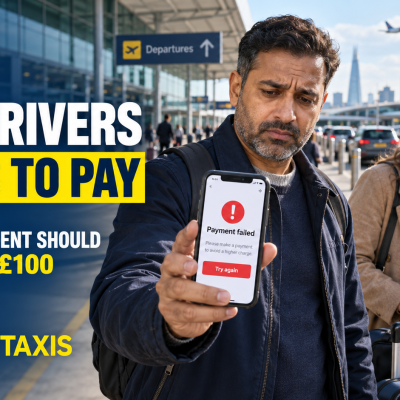
Flex Taxis Ltd has submitted a formal policy representation to Keir Mather MP, Parliamentary Under-Secretary of State for Aviation, Maritime and Logistics, proposing a national fair and accessible payment standard for airport drop-off charges.
The proposal asks airports to give motorists five days, or 120 hours, to pay a legitimate drop-off charge before issuing a Parking Charge Notice of up to £100.
Copies of the representation have also been sent to Simon Lightwood MP, Minister for Buses and Local Transport, Lewis Cocking MP, Member of Parliament for Broxbourne, and the Ministry of Housing, Communities and Local Government’s private parking policy team.
This is not only a taxi and private-hire trade issue. Airport drop-off payment deadlines affect everyone who takes a friend, relative, colleague or passenger to an airport.
Families, carers, disabled motorists, older people, holidaymakers and occasional airport visitors can all experience failed payments, forgotten deadlines and difficulties using barrierless online payment systems.
Why Next-Day Airport Payment Deadlines Are Unfair
At several major London airports, motorists must pay a drop-off charge by midnight on the day following their visit. London Luton Airport, for example, currently tells motorists to pay its drop-off and pick-up charge by midnight the next day.
Depending on when a vehicle enters the charging zone, the time available may vary. Nevertheless, it remains a short deadline for people managing work, family responsibilities, travel disruption or unexpected emergencies.
A payment may be missed for many legitimate reasons:
-
An AutoPay transaction may fail.
-
A registered bank card may have expired, been lost or been cancelled.
-
A payment warning may enter a spam or junk folder.
-
A motorist may enter an incorrect vehicle registration number.
-
Internet access or the payment website may fail.
-
A medical emergency or bereavement may take priority.
-
A disability or health condition may affect memory or concentration.
A missed payment does not necessarily mean that someone deliberately intended to avoid paying. However, under the current arrangements, a small drop-off charge can become a demand of up to £100 before the motorist has had a reasonable opportunity to identify and correct the problem.
Flex Taxis Is Not Asking for Free Airport Drop-Offs
Flex Taxis recognises that airports are entitled to impose legitimate charges under the applicable legal and contractual arrangements.
The proposal does not ask airports to abolish their charges. It asks them to design systems that help people pay what they owe before escalating the matter to enforcement.
A fair system should distinguish between deliberate non-payment and an honest mistake, failed transaction, emergency or temporary payment difficulty.
Giving motorists five days to pay would preserve the original charge while reducing unnecessary and disproportionate Parking Charge Notices.
Why Five Days Are Reasonable
A five-day, or 120-hour, payment period would give motorists enough time to:
-
Discover that an AutoPay transaction has failed.
-
Receive and respond to payment reminders.
-
Correct an incorrect vehicle registration.
-
Resolve a temporary online payment problem.
-
Arrange an alternative payment method.
-
Seek assistance or a reasonable adjustment.
-
Manage weekends, bank holidays and emergencies.
Five days would not prevent enforcement. Once the 120-hour period had expired, an airport could proceed under the applicable rules if the motorist had ignored the charge and all reminders.
Airports already use Automatic Number Plate Recognition technology to identify vehicles entering drop-off zones and retain the information required for enforcement. These systems should also be capable of supporting a five-day payment period, sending effective reminders and offering a final opportunity to pay.
Technology should help people comply. It should not simply identify mistakes and automatically escalate them into much larger financial demands.
Airport Payment Systems Must Be Accessible
Next-day online payment deadlines may place motorists with disabilities affecting memory, concentration or executive functioning at a particular disadvantage.
This may include some people with cognitive impairments, learning disabilities or long-term health conditions. A person may fully intend to pay but experience greater difficulty remembering and completing an online transaction within a short deadline.
Under the Equality Act 2010, service providers must consider reasonable adjustments where disabled people would otherwise be placed at a substantial disadvantage. The law does not prescribe one particular adjustment for every business. What is reasonable depends on the service, the barrier and the circumstances.
However, the duty placed on service providers is anticipatory. Businesses should consider potential barriers affecting disabled customers before an individual experiences the problem.
Flex Taxis is therefore asking airport operators and their payment contractors to consider:
-
A five-day payment period.
-
Repeated email and text reminders.
-
A final warning before the deadline expires.
-
Alternative and accessible payment methods.
-
A clearly published reasonable-adjustment procedure.
-
Additional assistance or extra time where appropriate.
Not everyone who forgets a payment has a disability, and not every disabled person experiences memory difficulties. Nevertheless, airport payment procedures should recognise that certain disabilities can make short, time-sensitive online payments substantially more difficult.
Our Operational Experience
Flex Taxis experienced the limitations of the current system after a bank card registered for AutoPay was lost and cancelled.
The replacement card took five days to arrive, but the relevant airport required payment by midnight on the day following the visit. The AutoPay transaction failed during this period, resulting in a £100 Parking Charge Notice.
This example shows how a motorist who intended to pay can face a substantial demand because the deadline provides insufficient time to identify and correct a payment problem.
Although this incident occurred during professional work, the same situation could affect a family whose bank card is lost or compromised while travelling, a carer managing an emergency or any motorist waiting for assistance.
What Flex Taxis Has Asked the Government to Do
Flex Taxis has asked the Government to:
-
Review the fairness, proportionality and accessibility of airport drop-off payment arrangements.
-
Engage with airport operators and their parking-management contractors about introducing a five-day payment period.
-
Encourage email and text reminders while charges remain unpaid.
-
Require or encourage a final warning at least 24 hours before the payment period expires.
-
Improve warnings when AutoPay transactions fail.
-
Give motorists a final opportunity to pay the original charge before a Parking Charge Notice is issued.
-
Ensure airports publish clear procedures for requesting reasonable adjustments or additional assistance.
-
Clarify which government departments and regulators oversee these arrangements.
-
Consider national guidance, an industry agreement, regulatory intervention or legislation if voluntary action is insufficient.
-
Examine whether airport drop-off enforcement is adequately covered by the Government’s private parking framework.
Why Legal Clarification Is Needed
Airport drop-off areas can be governed by complex and potentially different legal arrangements.
Depending on the airport and the status of the land, enforcement may involve airport byelaws, statutory powers, private contract law or another framework. This can make it difficult for motorists to understand their rights and obligations.
Flex Taxis has asked the Government to clarify:
-
Whether airport drop-off notices are private contractual charges or penalties issued under airport byelaws.
-
Whether Schedule 4 of the Protection of Freedoms Act 2012 applies.
-
Whether airport drop-off charges are covered by the private parking regulatory framework.
-
Which regulator oversees the fairness and accessibility of these arrangements.
Airport operators are private businesses, and ministers may not have an immediate power to prescribe their individual payment periods. However, the Government can engage with operators, develop guidance, coordinate voluntary standards and consider regulatory or legislative changes.
Support Five Days to Pay
Flex Taxis believes a five-day payment standard would protect motorists without preventing airports from collecting legitimate charges.
We are asking drivers, families, carers, disability organisations, consumer groups, taxi and private-hire representatives, MPs and members of the public to support the call for a fairer system.
The public can read, sign and share the proposal here:
Stop Treating Humans as Paying Robots: Give Drivers Five Days to Pay London Airport Drop-Off Charges
We will publish further information after receiving responses from the Department for Transport and other relevant government bodies.
Frequently Asked Questions
How long do motorists have to pay an airport drop-off charge?
The deadline depends on the airport. Some major airports require payment by midnight on the day following the visit. Motorists should always check the relevant airport’s official website before travelling.
Why is Flex Taxis asking for five days?
Five days would provide time to identify failed payments, receive reminders, resolve temporary difficulties and obtain assistance. It would also accommodate weekends, bank holidays, emergencies and certain disability-related needs.
Would five days allow motorists to avoid paying?
No. Motorists would remain responsible for paying the original charge. Enforcement could proceed after 120 hours if the charge remained unpaid despite appropriate reminders and opportunities to correct the problem.
Does the Equality Act require airports to provide five days?
The Equality Act 2010 does not specifically prescribe a five-day payment period. It requires service providers to consider reasonable adjustments where disabled people would otherwise experience a substantial disadvantage. Flex Taxis is proposing five days and effective reminders as practical accessibility measures.
Who controls airport drop-off charges?
Airport operators generally establish their own charging arrangements, sometimes using external parking-management contractors. The legal and regulatory framework may differ according to the airport, applicable byelaws and the status of the land.
Has Flex Taxis contacted individual airports?
Flex Taxis has first asked the responsible ministers and government departments to clarify the regulatory position and consider national coordination. We will review their responses before deciding whether to submit tailored proposals to individual airport operators.
References
Department for Transport (2026) Department for Transport: ministers and responsibilities. Available at: GOV.UK (Accessed: 13 September 2026).
Equality Act 2010. Available at: legislation.gov.uk (Accessed: 13 September 2026).
HM Government (2013) Disability: quick start guide for service providers. Available at: GOV.UK (Accessed: 13 September 2026).
London Luton Airport (2026) Drop-off and pick-up information. Available at: London Luton Airport (Accessed: 13 September 2026).
Parking (Code of Practice) Act 2019. Available at: legislation.gov.uk (Accessed: 13 September 2026).
Protection of Freedoms Act 2012, Schedule 4. Available at: legislation.gov.uk (Accessed: 13 September 2026).
Disclaimer
Airport charges, deadlines and enforcement arrangements can change. Motorists should check the relevant airport’s official information before travelling. This article presents a public policy proposal and provides general information only. It does not constitute legal advice or claim that any named airport has acted unlawfully.
Posted: September 13, 2026