Stop Invisible Digital Taxi Ranks: Why Britain Must Protect Local Taxis and Fair Competition
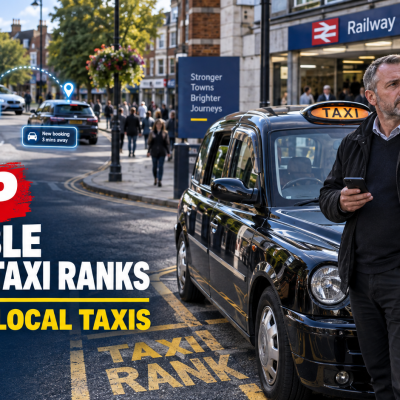
Flex Taxis Ltd has written to Simon Lightwood MP, Parliamentary Under-Secretary of State for Buses and Local Transport, requesting national action on app-based private-hire operators accepting and dispatching local journeys in areas where the operator responsible for the booking does not hold a local operator’s licence.
The formal policy representation asks the Government to consider a statutory geofencing requirement preventing an app-based private-hire operator from accepting or dispatching a journey beginning in a licensing area where that operator is not licensed.
This proposal would not prevent legitimate cross-boundary journeys. It would not stop locally licensed operators from using modern booking technology. Its purpose is to ensure that national digital platforms cannot build continuous local booking operations without accepting comparable local licensing responsibilities.
What Is an Invisible Digital Taxi Rank?
A traditional taxi rank is a physical location authorised by a local licensing authority. Only eligible Hackney carriages may wait there and accept passengers without a prior booking.
An invisible digital taxi rank operates differently.
Passengers open an app, see vehicles available nearby, obtain a price and request an almost immediate pickup. At the same time, drivers connected to the platform may position themselves in areas where demand is expected and wait for bookings generated from their immediate surroundings.
The booking remains legally classified as a pre-booked private-hire journey. However, from the passenger’s perspective, the service can perform a function similar to a taxi rank: a nearby vehicle is identified and dispatched within minutes.
The difference is that this activity takes place through an invisible digital network covering an entire borough or district rather than from a physical rank designated and monitored by the local licensing authority.
Flex Taxis is asking whether legislation developed before smartphone booking platforms became widespread remains suitable for this new commercial reality.
The Situation in Broxbourne
Flex Taxis Ltd is a private-hire operator licensed by Broxbourne Borough Council under operator licence number 156.
Although Uber does not hold a private-hire operator’s licence issued by Broxbourne Borough Council, passengers in Broxbourne can access its app, obtain prices and request local pickups from available drivers.
Drivers and vehicles licensed through another authority can enter Broxbourne and receive bookings through an operator licensed elsewhere, provided that the existing legal licensing requirements are satisfied.
Flex Taxis is not alleging that every cross-border journey is unlawful. The concern is that repeated immediate bookings and the systematic positioning of out-of-area vehicles can create what is, in practical commercial terms, a continuing local transport service.
This allows a national platform to benefit from Broxbourne’s passenger market without holding an operator’s licence issued by the council responsible for regulating local taxi and private-hire services.
Cross-Boundary Journeys Are Not the Main Problem
Cross-boundary travel is a necessary part of taxi and private-hire work.
A driver may collect a passenger in the area where the operator is licensed and transport that passenger to another district, city or airport. Preventing such journeys would be impractical and harmful to passengers.
The problem identified by Flex Taxis is different.
After completing a legitimate cross-boundary journey, an out-of-area driver may remain in the destination area waiting for new bookings generated through the same national platform. When this happens repeatedly and at scale, the platform can establish a continuous local presence without obtaining an operator’s licence covering that area.
There is an important distinction between completing an occasional journey across a licensing boundary and systematically using drivers positioned in another licensing area to serve that area’s local passenger market.
Why the Existing Triple Licensing Lock May Be Insufficient
The triple licensing lock generally requires the private-hire operator, driver and vehicle involved in a booking to be licensed by the same licensing authority.
This provides an important legal connection between the three parties. However, it does not necessarily create accountability to the licensing authority responsible for the place where the passenger is collected.
A national platform may satisfy the formal relationship between its operator, drivers and vehicles while maintaining extensive commercial activity in another licensing area.
The authority where the pickup occurs may have limited ability to determine:
- How many out-of-area vehicles are regularly working within its boundaries
- Where those vehicles wait for app-generated bookings
- How frequently local journeys are being accepted
- Whether local vehicle and driver standards differ
- How complaints should be investigated across licensing boundaries
- How the out-of-area operator should be held accountable locally
The internet should not make licensing boundaries meaningless.
The Effect on Local Taxi Regulation
Local authorities license Hackney carriages, designate taxi ranks, set licensing conditions, enforce standards and approve Hackney carriage fare tariffs.
These responsibilities are intended to provide local accountability and protect passengers.
However, the practical influence of local regulation becomes weaker when a national platform can introduce a large, digitally coordinated supply of out-of-area vehicles into a local passenger market.
Broxbourne Council may regulate locally licensed taxis and private-hire operators, but it cannot exercise the same direct control over an operator licensed by another authority.
This creates an imbalance. Local operators remain accountable to Broxbourne Borough Council, while a national platform can compete for Broxbourne passengers without accepting equivalent direct accountability to the same council.
Unequal Competition for Local Operators
Flex Taxis is not asking the Government to protect local businesses from fair competition. Competition can improve services, encourage innovation and give passengers more choice.
However, meaningful competition should take place under clear and comparable regulatory conditions.
Locally licensed taxi and private-hire businesses must meet licensing requirements, maintain appropriate insurance, invest in compliant vehicles and remain accountable to their local authority and community.
National platforms can use extensive advertising, promotional discounts, flexible pricing and large driver networks to enter smaller local markets.
Their scale gives them commercial advantages that independent operators and self-employed drivers cannot easily reproduce.
Flex Taxis estimates that its revenue has fallen by approximately 75% amid the intense pressure created by Uber’s widespread availability in Broxbourne. This figure represents the company’s direct business experience and does not, by itself, establish that every reduction was caused solely by Uber. Nevertheless, it demonstrates the severity of the pressure affecting a locally licensed operator.
Why Hackney Carriage Drivers Are Particularly Exposed
Hackney carriage drivers have the exclusive right to wait at authorised taxi ranks and accept passengers who hail them in the street.
In return, they accept specific responsibilities. They must comply with local licensing conditions, use approved vehicles and charge according to the tariff established by their licensing authority.
App-based private-hire services increasingly compete for the same immediate passenger demand. A customer who might previously have approached an authorised rank can now request a private-hire vehicle through an app and receive a pickup within minutes.
Hackney carriage drivers cannot independently change the tariff programmed into their meters whenever a large platform changes its prices or offers promotional discounts.
Private-hire operators can set their own booking prices. Large platforms may also use variable pricing and promotions to attract passengers.
The law continues to regulate Hackney carriages as a distinct, immediately available local service. However, app-based private hire can divert much of the passenger demand required to keep that service commercially viable.
Protecting Genuine Self-Employment
Hackney carriage driving has traditionally provided a route into genuine self-employment.
Drivers invest in vehicles, licensing, insurance, accessibility equipment, maintenance and training. They build relationships with local passengers and depend on fair access to the communities they serve.
In this respect, independent taxi drivers share important characteristics with plumbers, electricians, locksmiths, carpenters, joiners, painters and decorators. They invest in their own equipment and skills and depend on access to a viable local market.
Government would be concerned if the market power of a large national company systematically deprived independent skilled tradespeople of local work while avoiding equivalent local responsibilities. The same principle deserves consideration in relation to self-employed Hackney carriage drivers.
Technology should improve passenger transport without making locally accountable self-employment commercially unviable.
Why Local Taxis Matter to Passengers
This issue is not only about competition between businesses.
Hackney carriages and locally based private-hire operators serve passengers who may not always be adequately supported by app-only services, including:
- People who cannot use smartphones
- Passengers without app accounts or suitable payment cards
- Older people and disabled passengers
- Wheelchair users requiring accessible vehicles
- Visitors seeking transport from railway stations and town centres
- Passengers who require immediate transport without creating an online account
- People who value a visible and locally accountable service
- Customers who prefer to book by telephone or pay using another accepted method
If local operators close and Hackney carriage drivers surrender their licences, passengers may become increasingly dependent on a small number of national platforms.
Once local knowledge, accessible vehicles and independent competition have disappeared, rebuilding that provision could be difficult and expensive.
What Is Statutory Geofencing?
Geofencing uses location technology to create a digital boundary around a geographical area.
Flex Taxis is asking the Government to consider legislation requiring app-based operators to respect local licensing boundaries.
Where the operator responsible for accepting a booking does not hold an operator’s licence covering the pickup area:
- Its passenger platform should not accept a journey beginning in that area.
- Its driver platform should not offer or dispatch a booking originating there.
- The app should not present vehicles as available for immediate local pickups.
- Drivers should not position themselves in that area primarily to obtain local bookings through the platform.
- The operator should not use geographically targeted advertising or promotions to establish a local customer market.
A legitimate journey beginning in the operator’s licensed area and ending elsewhere would remain permitted. The proposed restriction would apply to new bookings originating outside the operator’s licensed area.
Locally Licensed Companies Must Still Be Able to Use Technology
Geofencing must be designed carefully so that it does not penalise locally licensed operators using third-party booking software.
Many local taxi and private-hire companies use technology supplied by specialist providers. The software supplier is not necessarily the licensed operator legally responsible for accepting and controlling the passenger’s booking.
A locally licensed operator should remain free to accept bookings through telephone, website and app-based systems.
The proposed restriction should apply to the licensed operator responsible for the booking, not to a technology company merely supplying software to a properly licensed local business.
This is not an argument against innovation. It is a request for the law to distinguish between technology supporting a locally accountable operator and technology enabling an out-of-area operator to create an invisible local transport network.
What Flex Taxis Has Asked the Government to Do
Flex Taxis has asked the Minister and the Department for Transport to:
- Examine invisible digital taxi ranks created through immediate passenger-booking and driver-dispatch apps.
- Consider mandatory geofencing where the operator responsible for a booking is not licensed for the pickup area.
- Assess the effect of out-of-area app operations on authorised taxi ranks, locally licensed operators and self-employed drivers.
- Clarify whether the Government intends Hackney carriages to remain a distinct and commercially viable part of Britain’s transport network.
- Explain what measures could prevent Hackney carriage services from disappearing because of unrestricted out-of-area app operations.
- Assess the consequences for wheelchair-accessible vehicles and passengers who cannot rely on app-only transport.
- Address invisible digital taxi ranks and the geographical reach of national platforms in forthcoming taxi and private-hire reforms.
- Distinguish between the licensed operator accepting a booking and a technology company supplying software.
- Meet Flex Taxis and representatives of the Broxbourne taxi and private-hire trade to discuss the evidence and proposed solution.
A National Problem Needs a National Response
Broxbourne Borough Council cannot resolve this problem acting alone.
Taxi and private-hire licensing remains geographically based, while national booking platforms, online advertising and driver-dispatch systems operate across local authority boundaries.
The consequences can be particularly serious in smaller licensing areas such as Broxbourne, where the local passenger market is limited and commercially active taxi-rank work is concentrated in relatively few locations.
Changing the size or structure of licensing authorities may improve consistency, but it will not necessarily resolve the underlying problem. Government must also examine where national platforms advertise, where drivers position themselves, where bookings originate and which authority can hold the operator accountable.
The Question Government Must Answer
Does the Government want Hackney carriages to remain a distinct and viable part of Britain’s local transport network, or does it accept that app-based private-hire platforms may gradually replace them?
If Hackney carriages are expected to remain, the distinction between taxis and private-hire vehicles must be protected in practical and commercial terms.
It is not enough to preserve that distinction in legislation while allowing technology to remove the passenger market that makes locally licensed taxi services viable.
Flex Taxis believes that innovation, passenger choice, fair competition and local accountability can coexist. Achieving that balance requires modern legislation capable of addressing digital platforms that operate across traditional licensing boundaries.
How the Public Can Support Fair Local Transport
Residents, passengers, disabled people, taxi and private-hire drivers, local businesses and community organisations can help by:
- Supporting locally licensed taxi and private-hire operators
- Asking app-based operators which authority licenses the operator responsible for their booking
- Sharing experiences of cross-border private-hire activity
- Contacting MPs about the future of local taxi services
- Explaining why accessible, telephone-bookable and locally accountable transport remains important
- Participating in future government consultations on taxi and private-hire reform
Flex Taxis will publish further information when it receives a response from the Minister and the Department for Transport.
Frequently Asked Questions
What is an invisible digital taxi rank?
It describes a situation in which passengers can use an app to see nearby vehicles and obtain an almost immediate pickup while drivers position themselves in the area waiting for app-generated bookings. It performs some of the practical functions of a taxi rank without operating from an authorised physical rank.
Are app-based private-hire bookings illegal?
App-based bookings are not inherently illegal. They are normally treated as pre-booked private-hire journeys. Flex Taxis is not alleging that every cross-border app booking is unlawful. The concern is whether the current legislation adequately regulates continuous local operations conducted through an operator licensed elsewhere.
What is the triple licensing lock?
The triple licensing lock generally requires the private-hire operator, vehicle and driver involved in a booking to be licensed by the same authority. The concern is that this does not necessarily create accountability to the authority responsible for the area where the passenger is collected.
Would geofencing prevent airport or long-distance journeys?
The proposed model would not prevent a properly licensed operator from collecting a passenger in its licensed area and taking that passenger across a boundary. It would restrict an out-of-area operator from accepting a new booking originating in an area its licence does not cover.
Would this prevent local companies from using booking apps?
No. A locally licensed operator could continue using booking software supplied by a technology provider. The restriction would apply to the operator legally responsible for accepting and controlling the booking.
Why are Hackney carriages different from private-hire vehicles?
Hackney carriages may use authorised ranks and accept street hails. Private-hire vehicles must be pre-booked through a licensed operator. Hackney carriage fares are commonly controlled through tariffs approved by the relevant licensing authority.
Why can Broxbourne Council not resolve this alone?
A local authority cannot easily restrict a national platform operating through licences issued by another authority. Clear national legislation or regulatory guidance is therefore required.
References
Department for Transport (2022) Taxi and private hire vehicle licensing: best practice guidance. Available at: GOV.UK (Accessed: 13 September 2026).
Department for Transport (2020) Statutory taxi and private hire vehicle standards. Available at: GOV.UK (Accessed: 13 September 2026).
Deregulation Act 2015. Available at: legislation.gov.uk (Accessed: 13 September 2026).
Local Government (Miscellaneous Provisions) Act 1976. Available at: legislation.gov.uk (Accessed: 13 September 2026).
Taxis and Private Hire Vehicles (Safeguarding and Road Safety) Act 2022. Available at: legislation.gov.uk (Accessed: 13 September 2026).
Disclaimer
This article presents Flex Taxis Ltd’s policy position and concerns about the existing taxi and private-hire licensing framework. It does not allege that every cross-border booking or journey is unlawful, nor does it make a finding of wrongdoing against any operator, driver or licensing authority. Legal and licensing arrangements may vary according to the circumstances. Readers should obtain independent legal advice where required.
Posted: September 13, 2026